Many companies in almost every sector have a need to be in contact with large amounts of people at once. Maybe a lot of customers are trying to get in touch to make the most of a special deal, maybe there are an influx of patients trying to get an appointment, maybe you need to update clients on a new feature. Whatever the reason, it isn’t always easy to handle a huge amount of calls at once, but failure to do so could have a truly detrimental impact on your business. Read more
Call centre agents are increasingly becoming the first and only point of contact that customers are having with businesses. Therefore, it’s understandable that any negative call centre experiences can be enough for clients to choose not pursue business with you. Read more
On the 1st of July 2015 Ofcom introduced a significant change in the way consumers are charged for dialling service telephone numbers (that's any number beginning with 084, 087, 09 or 118). In order to make things clearer for callers, organisations are now required to state a totally new charging structure wherever they advertise such numbers. Before the 1st July, calls to service numbers tended to be advertised in a certain way: Read more
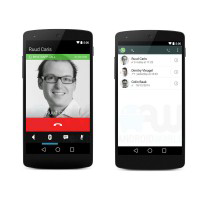
Back in 2007, two Yahoo! employees took a break from work to go travelling in South America with their savings. This trip was to spark discussions about a new mobile application based on status updates. Two years later, Jan Koum and Brian Acton founded WhatsApp, which has now evolved into the biggest mobile messaging app in the world. After an international beta trial, and an invite-only version of their new update, WhatsApp have now added VoIP calls into the mix for their 700 million monthly active users. Read more
One of the most common questions asked by customers of VoIP networks is "What level of CPS can your network handle?" CPS, or Calls Per Second is a term used widely in today's telecoms industry; you'll hear it in business meetings, presentations, sales pitches and in the conversations between technical network staff. But as it turns out, the number of calls per second is not actually the best indicator of network performance or call capacity. We got together with Simon Sharman, Technical Director at Nexbridge, to get the facts straight. Read more
Voice over Internet Protocol, or VoIP, is the communication protocols that allow for the transmission of
voice communications over the internet. In contrast to telephone calls that are made over the Public
Switched Telephone Network, where a connection is made between two points so that a call can be made, VoIP works by converting speech into tiny packets of data so that it can be transmitted, and then
reassembled at the destination. Read more
The costs associated with the operation of outbound call centres is extremely high, particularly in a situation where a centre has a large number of agents working for them. These high costs are palatable for a call centre when the operation is running smoothly, however, if there were to be a telecommunications issue, or a complete telecommunications service outage, then a call centre would be faced with a situation where they would be incurring all of the costs associated with their operation, but unable to generate any income through sales. In short, in situations such as this, a contact centre would be completely crippled, which makes it extremely important for a call centre to choose a provider that has a resilient and robust network. This article covers a small number of things that should be considered to ensure a network is reliable for call centre and enterprise customers. Read more
The ability to make and receive telephone calls is something that many of us take for granted, however, good practice should dictate that every contact centre carries out a full and thorough investigation into the resiliency of their telecoms provider to ensure that if a problem occurs, the ability of the call centre to continue operating isn't significantly compromised. Even if your ability to make and receive telephone calls isn't impacted, the degradation of call quality could have an equal impact on the operation of the call centre as a total telecoms outage. For the reasons specified above, it is of critical importance that questions about redundancy and resiliency are asked of your telecoms provider, and questions about the overall resiliency of your call centre are asked. Below are some examples of the types of questions that you need ask of your telecoms suppliers, and the types of action you should take to ensure resiliency: Read more